
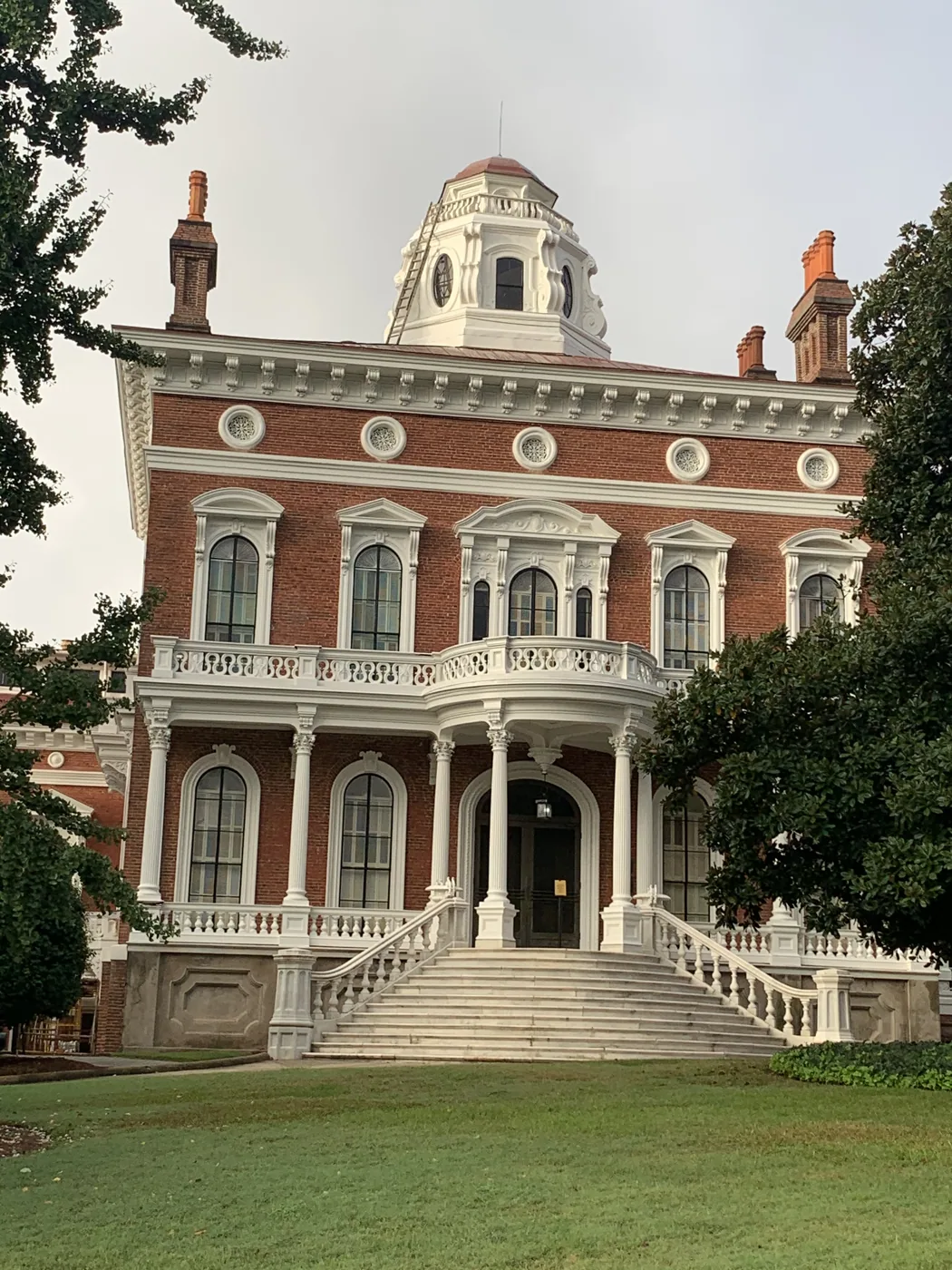
The city was incorporated in the nineteenth century, but the human story of this landscape reaches back thousands of years. A useful Macon history page connects Indigenous history, river geography, slavery and Reconstruction, architecture, Black culture and the music economy without pretending they are separate worlds.
Begin with Ocmulgee
The earthworks and archaeological record around Ocmulgee make it impossible to tell Macon's story honestly as if the land were empty before the modern city. The site's continuing significance to Muscogee people is essential context.
The nineteenth-century city grew through trade, labor and institutions
Railroads, cotton, slavery, religious institutions, education and postwar change shaped the street patterns and historic buildings visitors see today. Historic homes are visually impressive, but their social and economic context matters just as much.
Music became one of Macon's most visible exports
Twentieth-century artists and the Capricorn ecosystem made Macon internationally recognizable. Music is therefore not a separate lifestyle section; it is part of the city's economic and cultural history.
Make it current
Use the live calendar before you lock in the day. A festival, home game, museum program, concert or road closure can change the best version of this plan.